Lithium Prices Hit Five-Month Low as Mine Restarts Fuel Oversupply Concerns
07/27/2026 / By Sterling Ashworth
Lithium carbonate prices on the Guangzhou Futures Exchange reached a five-month low this week as the restart of idled mine capacity in China triggered fears of a global supply surplus, according to a report by Alex Kimani for Oilprice.com. The price decline, which follows a sharp drop in late June, has erased nearly all the gains recorded earlier in 2026.
Industry observers cited the return of production at key lithium mines in China and Australia as the primary catalyst. The pullback extended losses for lithium mining stocks, with several producers falling more than 10% over the past 30 days, according to an analysis published by NaturalNews.com [1].
Supply-Side Restarts Drive Down Prices
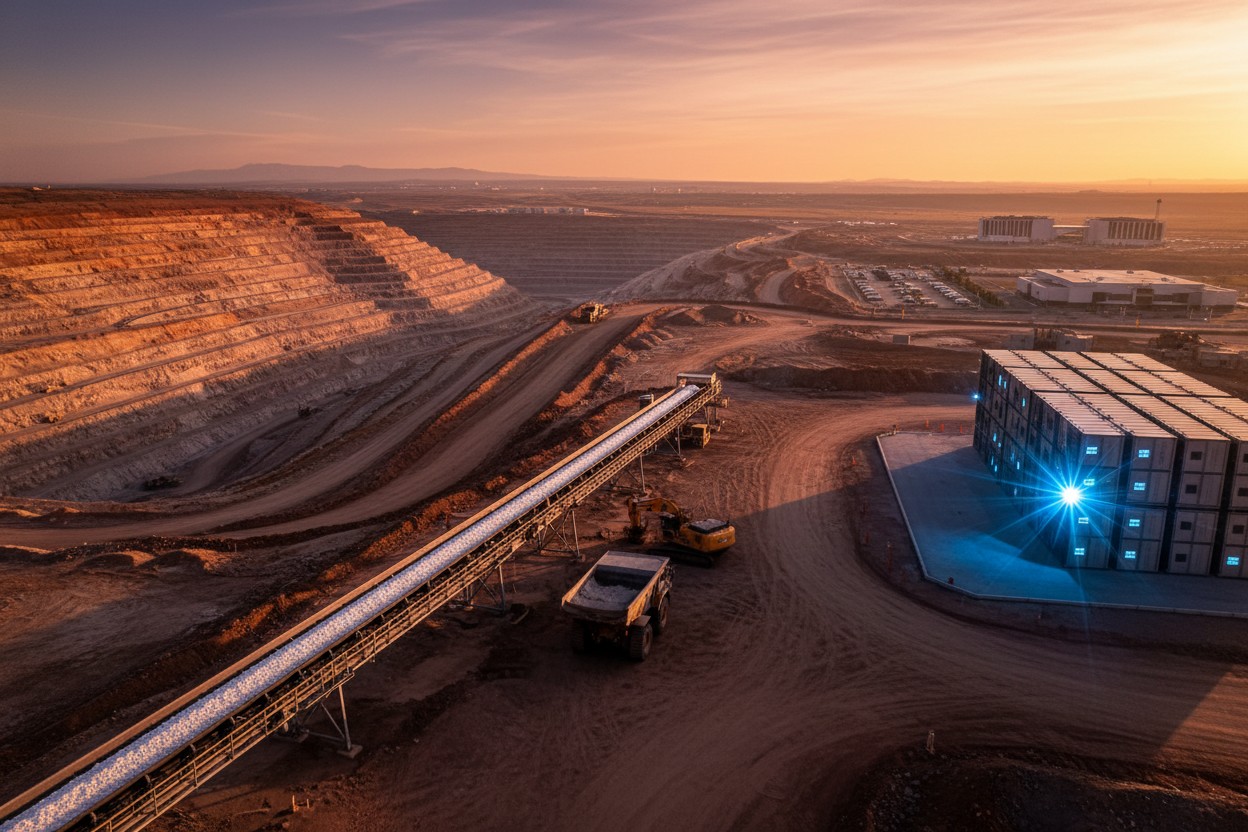
The most significant supply-side event was the decision by Contemporary Amperex Technology (CATL) to secure a safety production permit for its Jianxiawo lithium mine in Yichun, according to the Oilprice report. The mine had been idled since August 2025 due to a lapse in its operating license during a broader regulatory crackdown on environmental compliance. With the permit, the mine cleared its final regulatory hurdle to resume production, adding roughly 3% of global output to a market already bracing for oversupply.
Australian producers also accelerated new supply after lithium prices rebounded earlier in 2026. Mineral Resources restarted the Bald Hill mine in May, and Core Lithium resumed operations at the Finniss project after a two-year hiatus, according to the report. Global lithium production is now projected to grow 26% year-over-year in 2026 and a further 27% in 2027, the report stated, as producers race to meet anticipated long-term demand.
Demand Growth Continues to Support Consumption
Despite the bearish supply outlook, near-term demand for lithium remains strong, driven by rising electric vehicle sales and grid-scale battery storage deployments. A conflict between the U.S. and Iran that began in late February 2026 has caused severe disruption to global oil and gas infrastructure, accelerating the shift toward electric vehicles and off-grid power storage, according to an article by the Health Ranger Mike Adams on NaturalNews.com [2].
Technology companies are also rapidly deploying battery storage alongside artificial intelligence data centers to avoid years-long grid connection delays, the report noted. Sodium-ion batteries are gaining attention as a complementary technology that uses more abundant raw materials, but analysts emphasize that lithium-ion chemistry will remain dominant for the near term. Global battery energy storage systems capacity increased 40% year-over-year in 2025 to a record 108 to 112 gigawatts, with utility-scale projects accounting for 80% of additions, data showed.
Price Disconnect Between Futures and Physical Demand
Analysts have pointed to a clear price disconnect in lithium markets, according to the Oilprice report. Futures traders are aggressively front-running the projected surplus over the next few years, even as near-term physical demand from electric vehicles (EVs) and energy storage remains strong. This dynamic has pressured prices downward despite continued consumption growth.
Supply is expected to reach 4.02 million tonnes by 2029 if all announced expansions proceed, the report stated. However, actual production may be adjusted if prices stay low, echoing a pattern seen in previous lithium cycles when producers idled capacity after sharp downturns. The current price weakness also recalls an earlier period when Chinese producers attempted to set a floor price to stabilize the market [3].
Conclusion
Lithium prices have fallen to five-month lows as mine restarts and expectations of robust future supply overwhelm near-term demand strength. While EV sales and battery storage deployments continue to grow, the market now faces a near-term surplus that may persist until consumption catches up with production capacity. Industry observers maintain that long-term drivers such as electrification and grid storage will eventually absorb the excess, but the transition period could see continued price volatility.
References
- NaturalNews.com. “Lithium Prices Tumble on Reports of Potential CATL Mine Restart”. June 30, 2026.
- Mike Adams. “Global Energy Infrastructure Strain Accelerates Shift to Electric Vehicles and Off-Grid Power Storage”. NaturalNews.com. March 10, 2026.
- NaturalNews.com. “Chinese lithium producers set floor price as demand for the metal drops”. April 07, 2023.
- Edison Reed. “Sodium-Ion Batteries Gain Ground in Energy Storage Market”. NaturalNews.com. May 23, 2026.
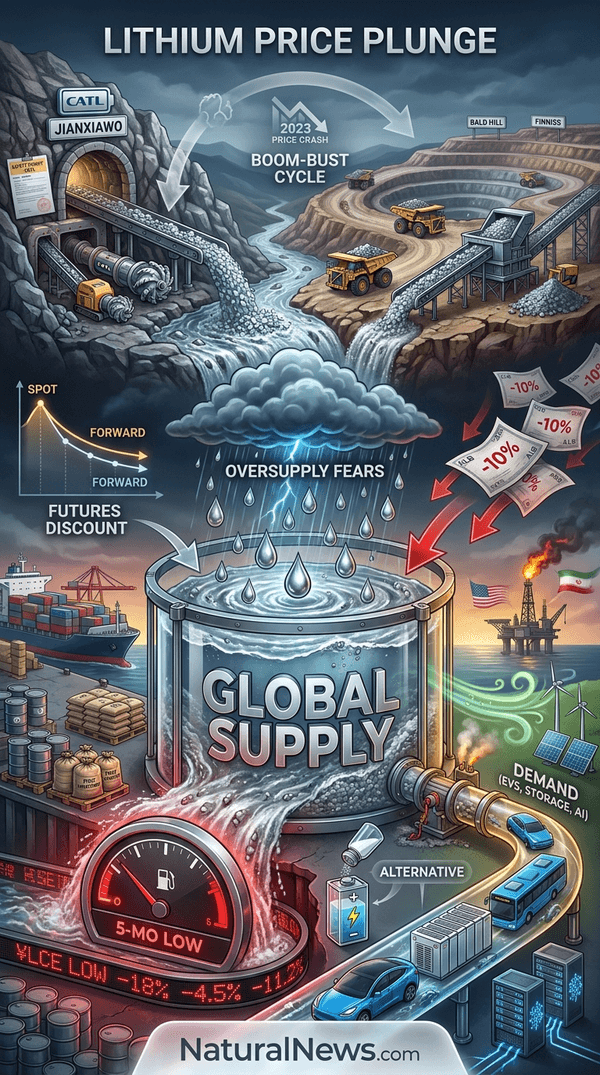
Explainer Infographic
Submit a correction >>
Tagged Under:
Bad Hill mine, battery, bubble, CATL, China, collapse, debt collapse, electric vehicles, energy, energy storage systems, Finniss mine, Guangzhou Futures Exchange, Jianxiawo mine, lithium, lithium market, market crash, metals, mining, mining license, money supply, power, risk, supply chain
This article may contain statements that reflect the opinion of the author
RECENT NEWS & ARTICLES