U.S. Cruise Ship Suspends Around-the-World Voyage in Cambodia, Disembarks 203 Passengers
10/31/2026 / By Garrison Vance
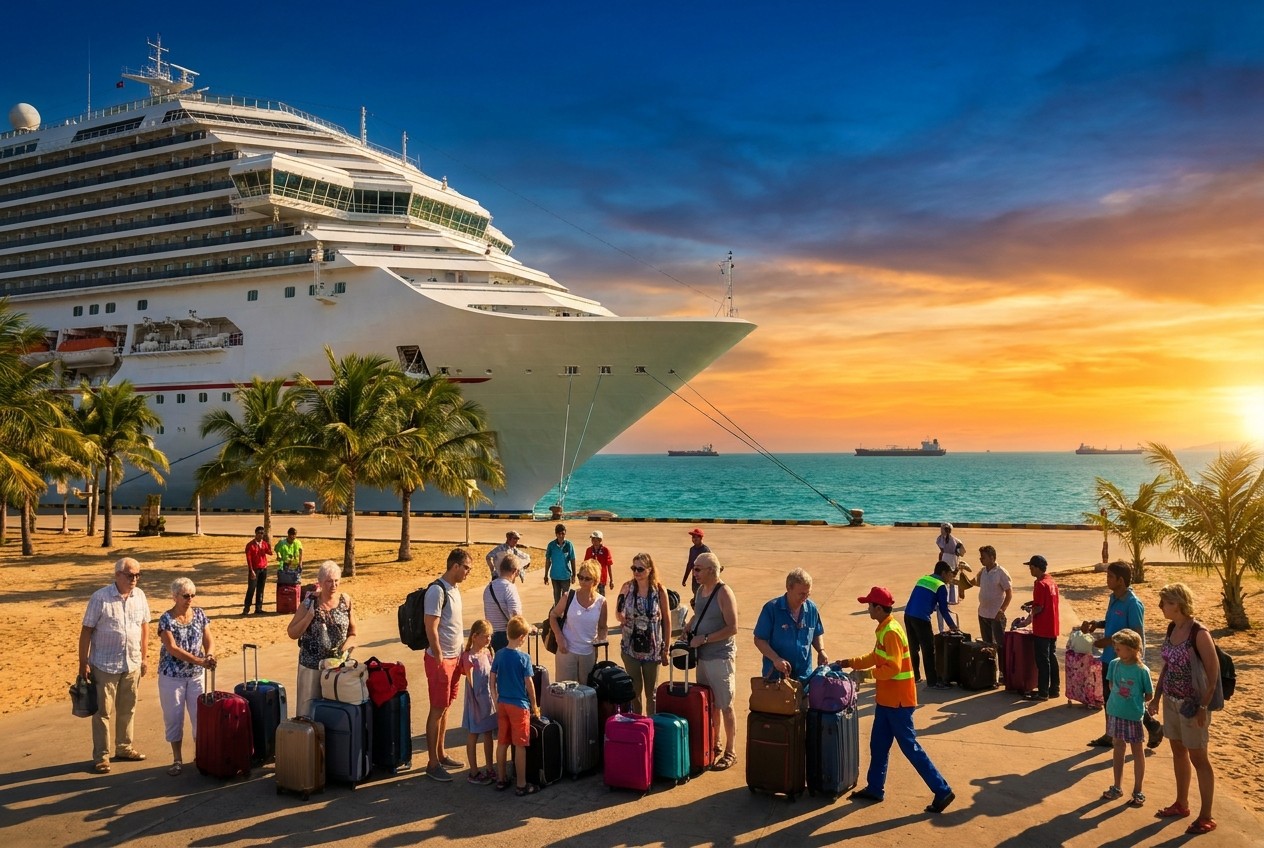
A U.S.-operated cruise ship on a three-year around-the-world voyage suspended its journey in Cambodia because of fuel costs, forcing 203 passengers to disembark, officials said.
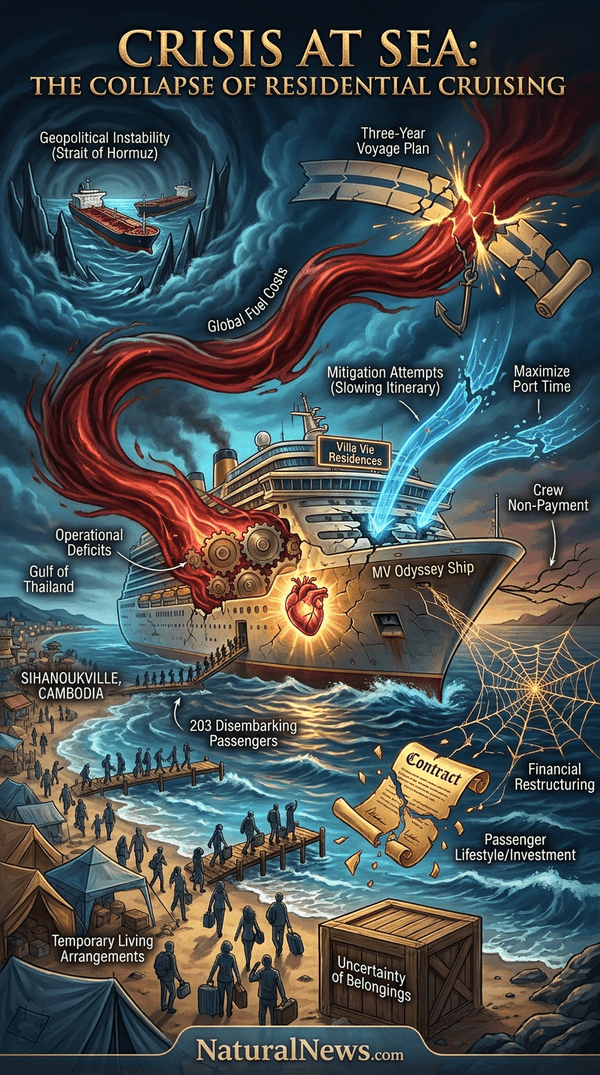
The MV Odyssey is docked at the city of Sihanoukville on the Gulf of Thailand with no certain departure date, according to Cambodian officials [1]. The Florida-based operator Villa Vie Residences said in a statement Tuesday, Oct. 27, that it could not continue carrying operating losses.
The company said it was working with residents to coordinate disembarkation and identify temporary living arrangements [1]. Passengers had purchased cabins under plans that promised years of living aboard, and many described the vessel as their full-time home.
Operator Cites Fuel Cost Increases in Asia
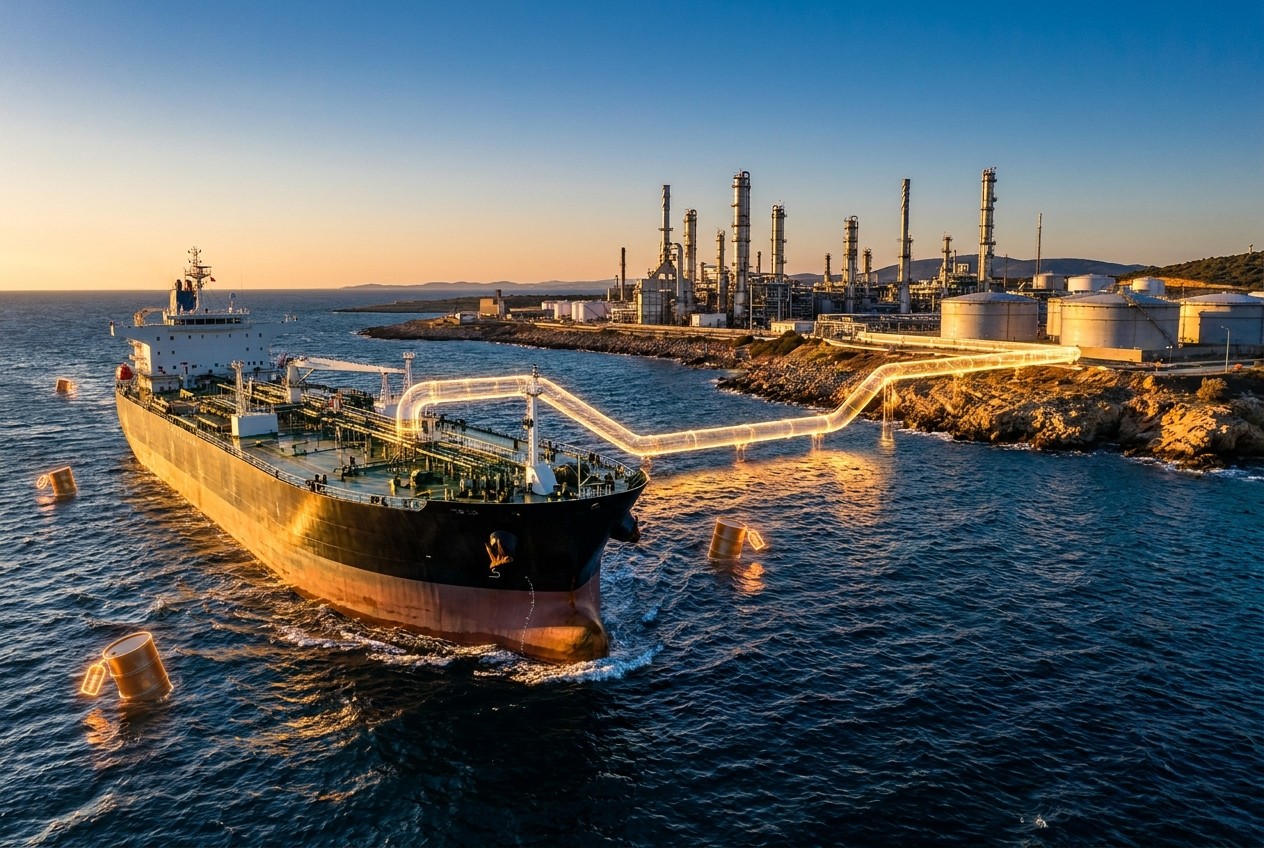
The company said it sought to reduce fuel consumption by slowing the itinerary and spending more time in port but was unable to offset surging costs. Traffic has been curtailed in the Strait of Hormuz since the war began, squeezing petroleum-based fuel supplies, especially in Southeast Asia, and sharply increasing prices [2].
The operator said passing the full increase on to residents was not a realistic solution and that its focus was supporting residents, crew and employees while it tries to restructure. Villa Vie Residences did not publicly specify how many residents had accepted assistance or how many remained aboard as of Wednesday, Oct. 28.
The fuel-cost pressures cited by the operator reflect broader strains on global energy markets. Analysts have warned that disruptions to oil shipments through the Strait of Hormuz can push crude prices sharply higher, with knock-on effects for transportation and shipping costs worldwide [3]. For a residential ship dependent on steady fuel purchases across multiple regions, those increases proved decisive.
Passengers Say They Received Seven Hours’ Notice
Passengers said they received no support and had to make their own arrangements after being given seven hours’ notice on Tuesday to disembark.
Paul and Lynn Montoya, a retired couple from Wyoming, said they bought a window cabin and had expected to sail for years after boarding 17 months ago in Panama. Paul praised the concept of residential cruising but said the shipowner lacked the expertise to make the business financially sustainable – citing itinerary changes, unreliable internet access and declining food quality that pushed some residents to leave.
Lynn said residents were repeatedly asked to contribute additional money for fuel and other expenses, including a call to raise funds to leave Cambodia, and that crew members were also not paid. The company could not immediately be contacted for comment. The Montoyas’ account could not be independently verified.
Other passengers described a similar scramble. Several said they had shipped belongings ahead to future ports and were now uncertain where those items would be delivered. The abrupt nature of the announcement left many residents, some of whom had sold homes to join the voyage, searching for lodging in Sihanoukville or arranging flights home.
Some Residents Describe Experience, Hope for Rescue
Carol Larson, 69, and her sister Crystal Lavering, 72, from California, occupied separate cabins aboard the ship for 18 months and described the suspension as heartbreaking. Larson said she hoped residents could buy the ship and that the venture could continue, calling living aboard a dream.
Larson said she bought her cabin for $120,000 in installments, plus monthly maintenance fees, under a plan that promised the possibility of living aboard for up to 15 years. She said she blamed U.S. President Donald Trump for the ship’s woes as fuel costs spiked due to the Iran war, in addition to poor management, but said she did not regret her investment.
Despite the negatives mentioned by her sister, Lavering shared a positive development during the voyage. She told the Associated Press that her health improved during her time on the ship and that she no longer needed a cane to walk.
The sisters’ reactions illustrated the broader mix of loss and attachment among residents. Some passengers had spent years preparing for the voyage, selling property and relocating from their home countries. For them, the ship represented not a vacation but a retirement plan, and its suspension raised questions about what would come next.
Ship History and Next Steps
Long Dimanche, deputy governor of Cambodia’s Preah Sihanouk province, said in a statement that the ship was now expected to refuel and depart the country on Saturday, Oct. 31 – but the operator has not publicly confirmed a date. Cambodian officials said they were coordinating with the company and local authorities to ensure passengers had access to temporary accommodations and transportation.
Built in 1993 and operated under different names by several cruise lines before the Wuhan coronavirus (COVID-19) pandemic in 2020, the Odyssey was bought by Villa Vie Residences in 2023. Its current cruise began in October 2024 in Belfast, Northern Ireland, and was originally intended to last 3 1/2 years; a second cruise had been tentatively scheduled to end in August 2030.
The port city has since become a regular stop for cruise ships navigating Southeast Asia, though the Odyssey’s suspension marks an unusual interruption for a vessel designed for continuous global travel. The operator said it would provide updates on the ship’s status and residents’ options as restructuring talks continue.
References
- A US cruise ship suspends a global voyage in Asia due to fuel costs, stranding 200 passengers. https://apnews.com/article/us-cambodia-cruise-ship-fuel-88fa620415d8e490cbe5a25ca5cb0691
- Health Ranger Report – Situation Update HRR Interview with Steve Quayle – Mike Adams – BrightVideos.com, October 23, 2023.
- Mike Adams interview with Steve Quayle – October 23 2023. Mike Adams
Explainer Infographic
Submit a correction >>
Tagged Under:
Cambodia, Carol Larson, collapse, cruise ship, Crystal Lavering, energy supply, fuel costs, fuel supply, global voyage, Long Dimanche, Lynn Montoya, MV Odyssey, Paul Montoya, Preah Sihanouk, Sihanoukville, Southeast Asia, survival, transportation, Ville Vie Residences
This article may contain statements that reflect the opinion of the author
RECENT NEWS & ARTICLES